
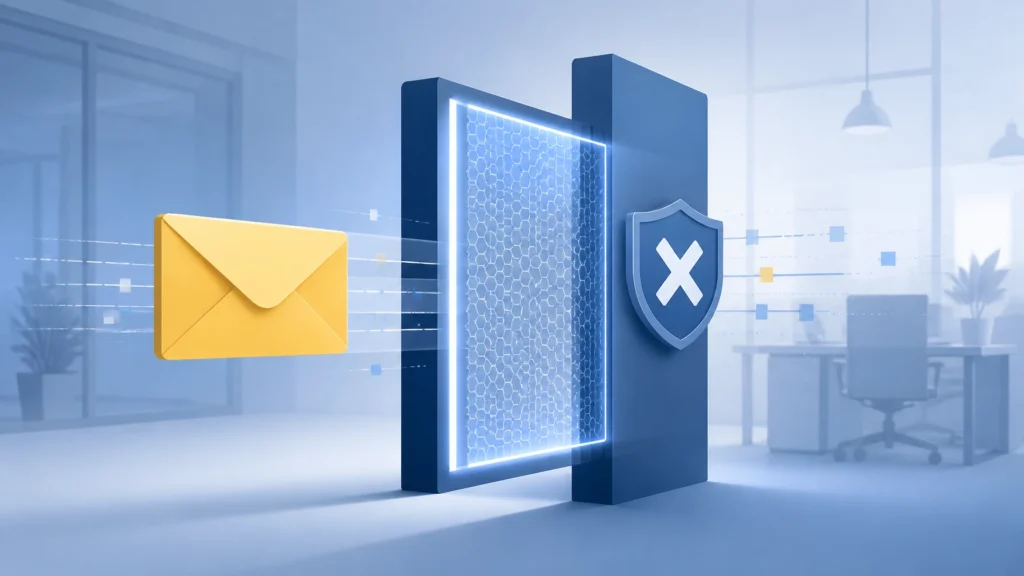
Are your world-class B2B campaigns hitting a digital brick wall? You’ve spent weeks crafting the perfect pitch, identified your high-value MQLs, and hit "Send": only to find your open rates plummeting toward zero. In 2026, the landscape of B2B email marketing has undergone a seismic shift. Mailbox providers, led by the aggressive gatekeeping of Microsoft 365, have transitioned into what industry experts call "Hard Mode."
If you aren’t seeing the ROI you expect, it’s likely not your offer; it’s your deliverability. Microsoft’s inbox placement has dipped as low as 75.6% for bulk senders, compared to much higher rates for Gmail and Yahoo. At AptZion, we understand that in the world of high-stakes demand generation, "close enough" isn't good enough. You need inch-perfect precision to ensure your voice reaches the decision-maker’s primary inbox.
Here are the 10 critical reasons your B2B emails are landing in spam and the robust strategies you need to reclaim your domain authority.
1. CRIPPLING AUTHENTICATION FAILURES (SPF, DKIM, DMARC)

Is your technical foundation crumbling? In 2026, authentication is no longer an "optional best practice": it is a mandatory requirement for survival. If your SPF (Sender Policy Framework), DKIM (DomainKeys Identified Mail), and DMARC (Domain-based Message Authentication, Reporting, and Conformance) aren't configured with surgical precision, Microsoft and Google will discard your emails before they even reach the spam folder.
Without these protocols, filters view your emails as potential phishing attempts. A robust DMARC policy tells the world that you are a legitimate entity, protecting your brand from spoofing and ensuring your lead generation efforts aren't sabotaged by technical oversight.
2. THE PRIMARY DOMAIN TRAP
Are you risking your entire company's communication infrastructure on a cold outbound campaign? One of the most common mistakes B2B firms make is sending high-volume outreach from their primary corporate domain (e.g., @company.com).
If a few recipients flag your emails as "junk," your entire domain reputation takes a hit. This means your critical transactional emails and internal communications will also start landing in spam. To beat "Hard Mode," you must utilize separate, properly warmed subdomains or alternative domains for your demand generation activities.
3. RELYING ON "DIRTY" DATA AND STALE LISTS

How fresh is your database? The single fastest way to destroy your deliverability is by sending to unverified, old, or scraped B2B lists. In the current environment, a hard bounce rate exceeding 0.05% is a major red flag for filters.
Stale lists are often riddled with "spam traps": email addresses maintained by providers specifically to catch illegitimate senders. If you hit just one of these, your IP could be blacklisted instantly. At AptZion, we leverage precision intent data and rigorous verification to ensure your targets are not only active but ready to engage.
4. LOW ENGAGEMENT VELOCITY (THE "SWEEP" EFFECT)
Microsoft 365 doesn't just look at whether people report you as spam; it looks at how they interact with you. If a large percentage of your recipients are deleting your emails without opening them, or using Microsoft’s "Sweep" function to clear your messages, the algorithm learns that your content is low-value.
Low engagement velocity sends a signal to filters that your mail is unwanted "graymail." To counter this, you must prioritize quality over quantity. Segment your audience briskly and ensure every send provides immediate, tangible value to the recipient.
5. SUDDEN VOLUME SPIKES (THE "MASS BLAST" ERA IS DEAD)
Are you still sending "mass blasts" to your entire database at once? This "shotgun approach" is a guaranteed ticket to the junk folder. Mailbox providers look for consistent, predictable sending patterns. A sudden spike of 10,000 emails from a domain that usually sends 100 triggers an immediate fraud alert.
The solution? A systematic "warm-up" process and a consistent sending cadence. Professional services firms must treat their email volume like a finely-tuned engine: increasing speed gradually to maintain peak performance.
6. SHADY TRACKING LINKS AND REDIRECTS
Did you know a single link can sink your entire campaign? If you use generic link shorteners or third-party tracking domains that have been flagged for abuse elsewhere, your email will be collateral damage.
Filters scan every URL in your body copy. If a link points to a domain with a poor reputation, your message is toast. Use custom, branded tracking domains that align with your sending domain to maintain a "clean" technical signature.
7. CONTENT "NOISE" AND SPAM-TRIGGER FORMATTING

Is your design working against you? While you might want a beautiful, image-heavy newsletter, "Hard Mode" filters often view HTML-heavy emails as promotional clutter. Excessive use of "salesy" trigger words (e.g., "100% Free," "Guaranteed," "Act Now") or messy, unoptimized code can trip AI-driven filters like Microsoft Defender for Office 365.
Keep your B2B outreach lean. Professional, text-based emails often perform significantly better because they mimic a genuine one-to-one conversation: the holy grail of B2B communication.
8. MISSING "LIST-UNSUBSCRIBE" HEADERS
Making it hard to leave is the quickest way to get reported. If a recipient can’t find your unsubscribe link in 2 seconds, they will hit the "Report Spam" button instead. This is a catastrophic outcome for your reputation.
Modern deliverability requires a "List-Unsubscribe" header, which allows mailbox providers to show a clean unsubscribe button at the top of the interface. This provides a safe exit for the recipient and protects your domain from negative user signals.
9. POOR IP REPUTATION AND "BAD NEIGHBORHOODS"
Are you on a shared IP address? If you use a cheap email service provider (ESP), you might be sharing an IP with "bad neighbors": spammers who are actively ruining the reputation of that server.
For businesses requiring world-class deliverability, a dedicated IP address is often the only way to ensure your reputation is entirely within your control. You wouldn't share an office with a known fraudster; don't share your digital sending address with one either.
10. MICROSOFT’S "HARD MODE" AI FILTERS
Microsoft’s security suite (Defender) uses advanced heuristics and machine learning to analyze every incoming B2B email. It doesn't just look for viruses; it looks for intent. If your email looks like a generic bulk send, even if it’s legitimate, Microsoft will route it to the "Other" tab or the Junk folder to keep the user's "Focused Inbox" clean.
To beat this, your content must be hyper-personalized. Using content syndication strategies to build familiarity before you ever send an email can dramatically improve your "trusted sender" status in the eyes of Microsoft’s AI.
WE GENERATE LEADS, YOU GENERATE PROFIT

Navigating the complexities of B2B email deliverability in 2026 requires more than just a good subject line. It requires a strategic partner who understands the "mathematics" of inbox placement. At AptZion, we provide an end-to-end solution for your market research and demand generation needs, ensuring your message doesn't just get sent: it gets seen.
Don't let "Hard Mode" stifle your growth. It’s time to implement a robust, data-driven strategy that guarantees your seat at the table.
Ready to scale your outreach with inch-perfect precision?
Get started with AptZion today.