
Is your high-velocity sales pipeline suddenly hitting a brick wall? You’ve identified the "Decision Maker," your SDRs have secured the initial interest, and your MQL-to-SQL conversion rate looks stellar on paper. Yet, month after month, lucrative deals vanish into the "No Decision" abyss.
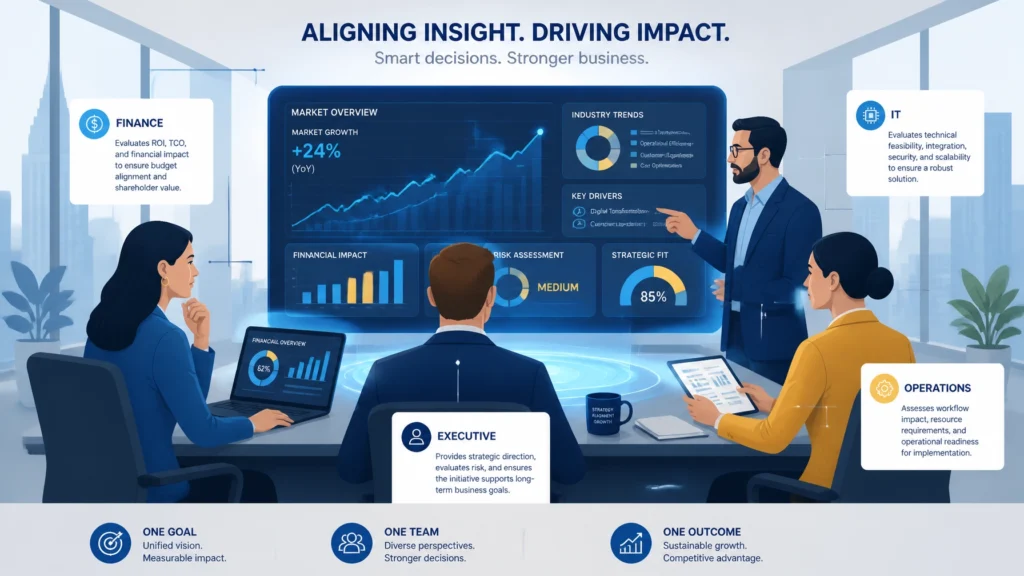
The reality of 2026 B2B procurement is harsh: you aren't selling to a person; you are selling to a complex, multi-headed collective. Modern buying committees now average 6 to 10 stakeholders, each armed with their own AI-driven research and conflicting departmental priorities. If your market research strategy still treats the "buyer" as a monolithic persona, you are essentially flying blind.
At AptZion, we specialize in dismantling these roadblocks through precision-targeted data and robust B2B research methodologies. Below, we break down the seven most critical mistakes you are making with your buying committee research and exactly how to fix them to guarantee brisk revenue growth.
1. TARGETING THE "HERO" WHILE IGNORING THE SILENT MAJORITY
Are you obsessed with the C-Suite? While the VP of Marketing might sign the check, the Security Analyst and the Finance Director are the ones who can veto the deal before it even reaches the finish line.
The Mistake: Most research efforts focus exclusively on the "Champion": the person who expresses the most enthusiasm. By ignoring the technical evaluators, legal gatekeepers, and end-users, you leave your Champion to fight an uphill battle internally without the necessary ammunition.

The Fix: You must map the entire committee. Identify the Economic Buyer, the Technical Evaluator, and the User Influencer. At AptZion, we help you uncover these "silent" stakeholders by tracking account-level engagement across multiple departments. You need to provide "forwardable" content: ROI calculators for Finance and security dossiers for IT: that allows your Champion to socialize the value proposition effortlessly.
2. RELYING ON STATIC FIRMOGRAPHICS INSTEAD OF LIVE INTENT
If your lead lists are based solely on company size, geography, and industry, you are working with stale data. In the world of high-stakes Professional Services, timing is everything.
The Mistake: Using static demographic data assumes that every company in your ICP (Ideal Customer Profile) is always in-market. This leads to wasted ad spend and aggressive outreach to prospects who have zero intent to buy, effectively nuking your brand reputation.

The Fix: Shift your focus to Intent Data. You need to know which accounts are actively researching your specific solution right now. Are they visiting your competitors' pricing pages? Are they downloading whitepapers on integration hurdles?
By leveraging dark intent signals, you can identify the "Active Demand" in your market. Stop calling cold lists and start engaging accounts that are already showing "buy" signals. This is how you transition from being a vendor to a strategic partner.
3. MEASURING INDIVIDUAL MQLs INSTEAD OF ACCOUNT MOMENTUM
The "Lead" is dead. The "Account" is the only metric that matters.
The Mistake: Marketing teams often celebrate a high volume of individual MQLs (Marketing Qualified Leads). However, three MQLs from three different companies are worth significantly less than three engaged stakeholders from the same account. If your research doesn't aggregate behavior at the account level, you are missing the signal of a maturing deal.
The Fix: Transition your KPIs to Account Engagement Lift. We recommend tracking "Consensus Health." Are multiple departments engaging within a 14-day window? When you see the CISO, the CFO, and the Operations Manager all consuming content simultaneously, you aren't just looking at leads: you’re looking at a high-probability SQL. Use a B2B Insights Blitz to validate this momentum and ensure your sales team strikes while the iron is white-hot.
4. IGNORING THE "ANONYMOUS" RESEARCH PHASE
Did you know that 70% of the B2B buying journey is completed before a prospect ever speaks to a salesperson?
The Mistake: Many businesses wait for a "Contact Us" form submission to start their research. By then, the buying committee has likely already formed a preference and created a shortlist that may not include you. If you aren't influencing the committee during their "anonymous" research phase, you are playing a losing game of catch-up.
The Fix: Invest in Content Syndication and SEO strategies that target the "Problem Definition" stage. Your research should uncover the specific questions committee members ask AI agents and search engines months before they buy. Position your brand as the authoritative voice in these early-stage discussions. By the time they are ready for a demo, your solution should feel like the inevitable choice.
5. DISTRIBUTING ONE-SIZE-FITS-ALL CONTENT
Sending the same generic deck to a CFO and a Lead Developer is a recipe for instant deletion.
The Mistake: Most demand generation campaigns suffer from "Messaging Fatigue." You serve the same high-level value proposition to everyone in the committee, failing to address the granular, role-specific pain points that drive individual buy-in.

The Fix: You must deploy Role-Based Nurture Streams.
- The CFO wants to see IRR, payback periods, and risk mitigation.
- The IT Manager wants to see API documentation and uptime guarantees.
- The End-User wants to see a world-class UI and time-saving workflows.
AptZion’s precision targeting ensures that each member of the committee receives a tailored narrative. We don’t just generate leads; we facilitate internal consensus by speaking everyone’s language.
6. BRINGING FINANCE AND SECURITY IN TOO LATE
Nothing kills a deal faster than a last-minute "No" from the Security or Legal team.
The Mistake: Sales teams often treat Finance and Security as "administrative hurdles" to be cleared at the end of the cycle. This is a tactical error. In 2026, these roles are proactive risk owners. If they haven't been "sold" on your reliability and compliance early on, they will flag your deal as a high-risk liability during the final review.

The Fix: Proactively provide security dossiers and compliance certifications mid-funnel. Don't wait for them to ask. By offering a "Risk Mitigation Package" early in the research phase, you build trust and eliminate friction before it becomes a bottleneck. This is the difference between a deal that drags for six months and one that closes briskly.
7. FAILING TO TRACK ACCOUNT-LEVEL VELOCITY
Is your deal moving, or is it just sitting in the CRM gathering dust?
The Mistake: Research often focuses on who is in the committee, but neglects how fast they are moving. A lack of cross-functional activity over a 30-day period is the number one predictor of a stalled deal. If you aren't monitoring the velocity of engagement, you can't intervene until it's too late.
The Fix: Implement automated alerts for account-level activity. If a new stakeholder from the Legal department suddenly views your Terms of Service, that is a high-velocity signal that the deal is progressing to the final stages. Use dynamic intent data to track these pivots in real-time.
WE GENERATE LEADS, YOU GENERATE PROFIT
Mastering buying committee research isn't just about collecting data: it's about orchestrating a strategic symphony that leads to a "Yes" from every stakeholder. In the hyper-competitive landscape of 2026, "good enough" research will leave you behind. You need inch-perfect insights and a robust demand generation engine to dominate your sector.
Are you ready to stop guessing and start growing? Whether you are in healthcare, recruitment, or finance, AptZion provides the end-to-end solutions you need to scale.
Get started today. Click here to know more about how our B2B Insights Blitz can transform your pipeline.